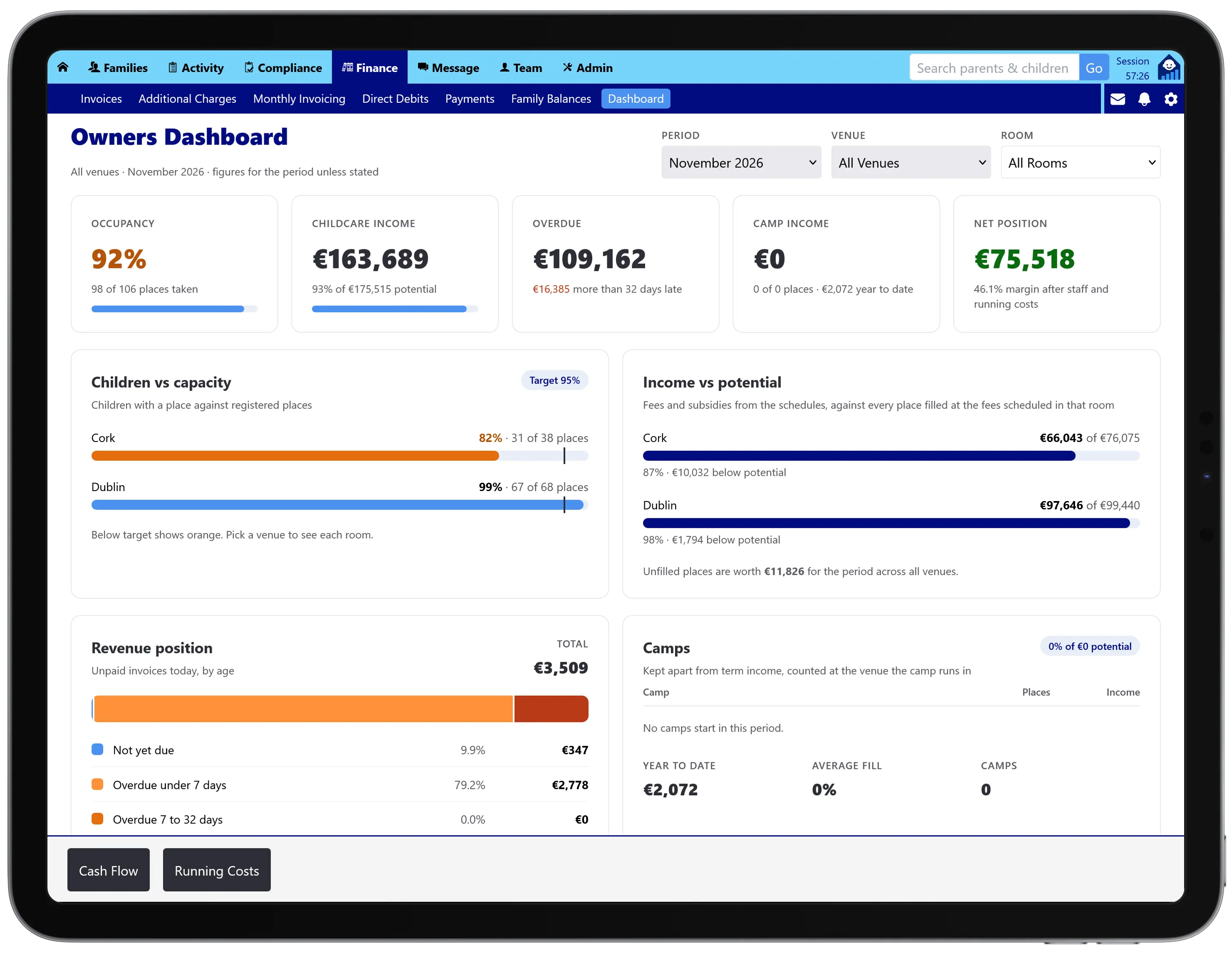
The whole business on one screen
Choose a month or the year to date, then look at the whole business, one venue or one room. You see children against capacity, income against potential, overdue fees, camp income and your net position.
It uses what Tot Tracker already knows about your children, rooms, fee schedules and NCS and ECCE funding, and adds your running costs, so the answers come from live data instead of last year's accounts.
What every empty place is costing you
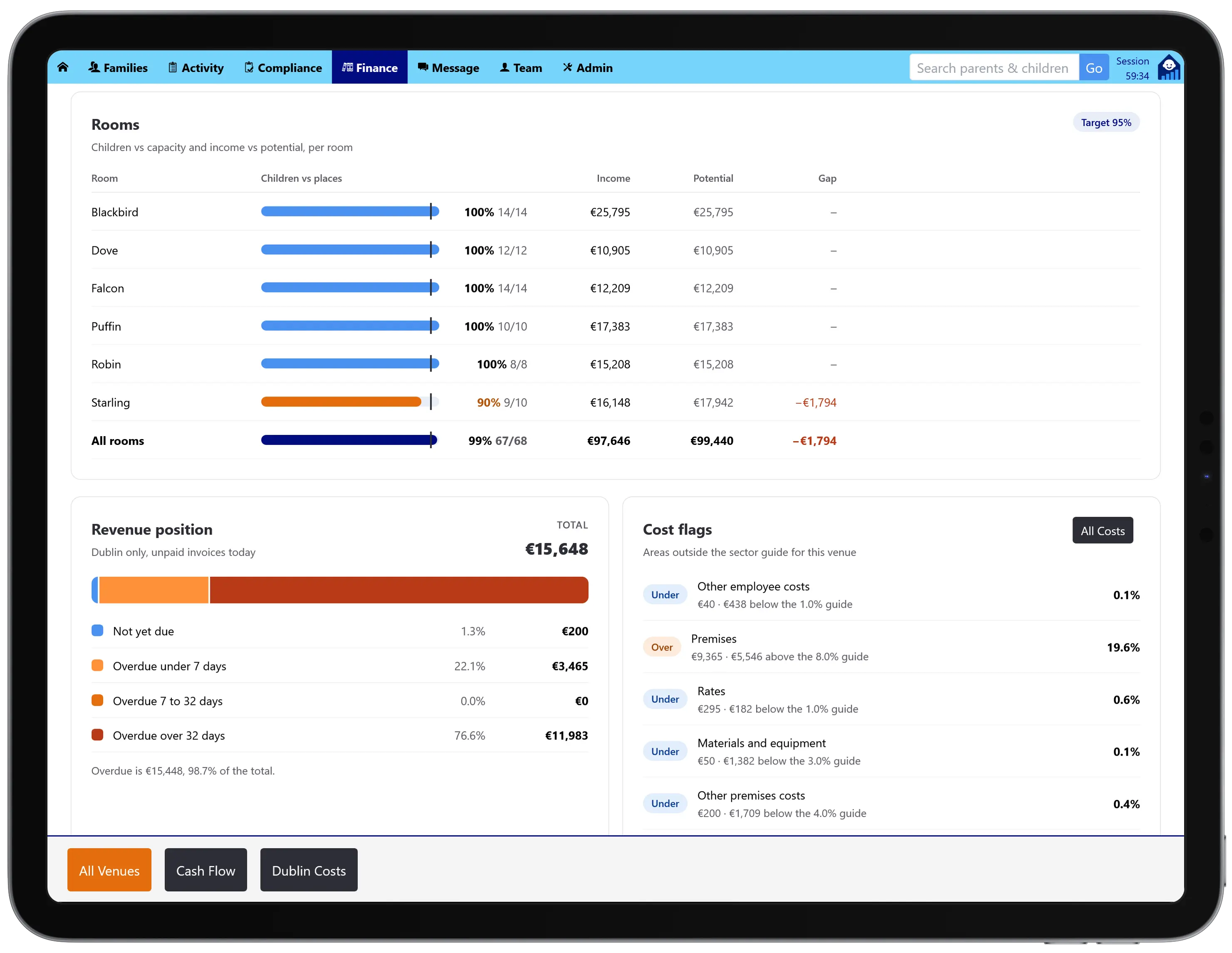
For each room, Tot Tracker compares the children you have with the places you are registered for, and the income they bring with what the room would earn if it were full. The gap is shown in euro.
Venues below your occupancy target are highlighted, so you can see where to focus first.
Running costs, set up from a bank statement
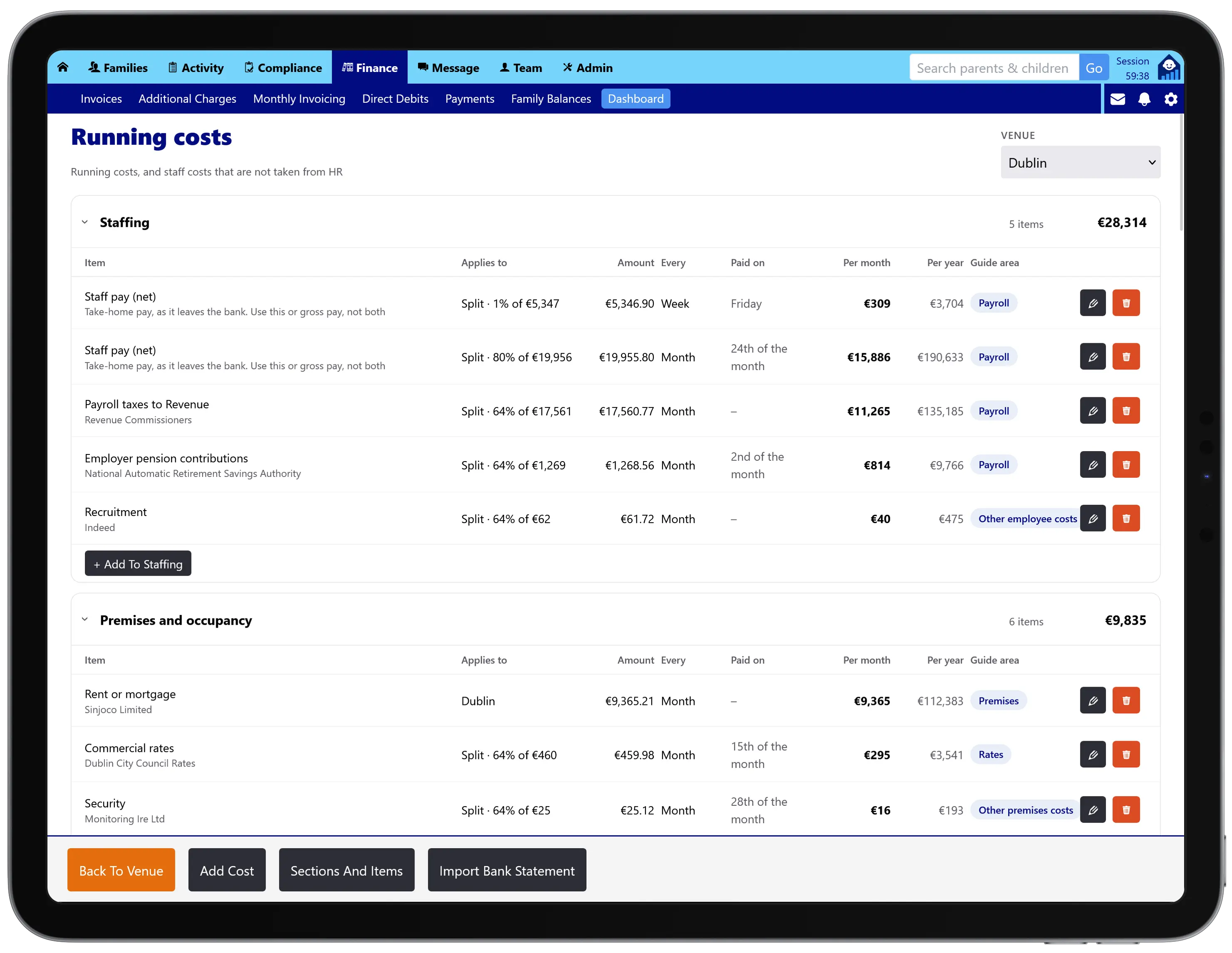
Costs are grouped into the sections a childcare business actually has, and each one repeats on its own cycle. A cost can belong to one venue, be shared between venues, or sit at business level.
You do not have to type in a year of bills. Upload a bank statement and Tot Tracker finds the payments that repeat and suggests what each one is. You choose to add, update or skip each one, and nothing is saved until you say so. AIB statements are supported today.
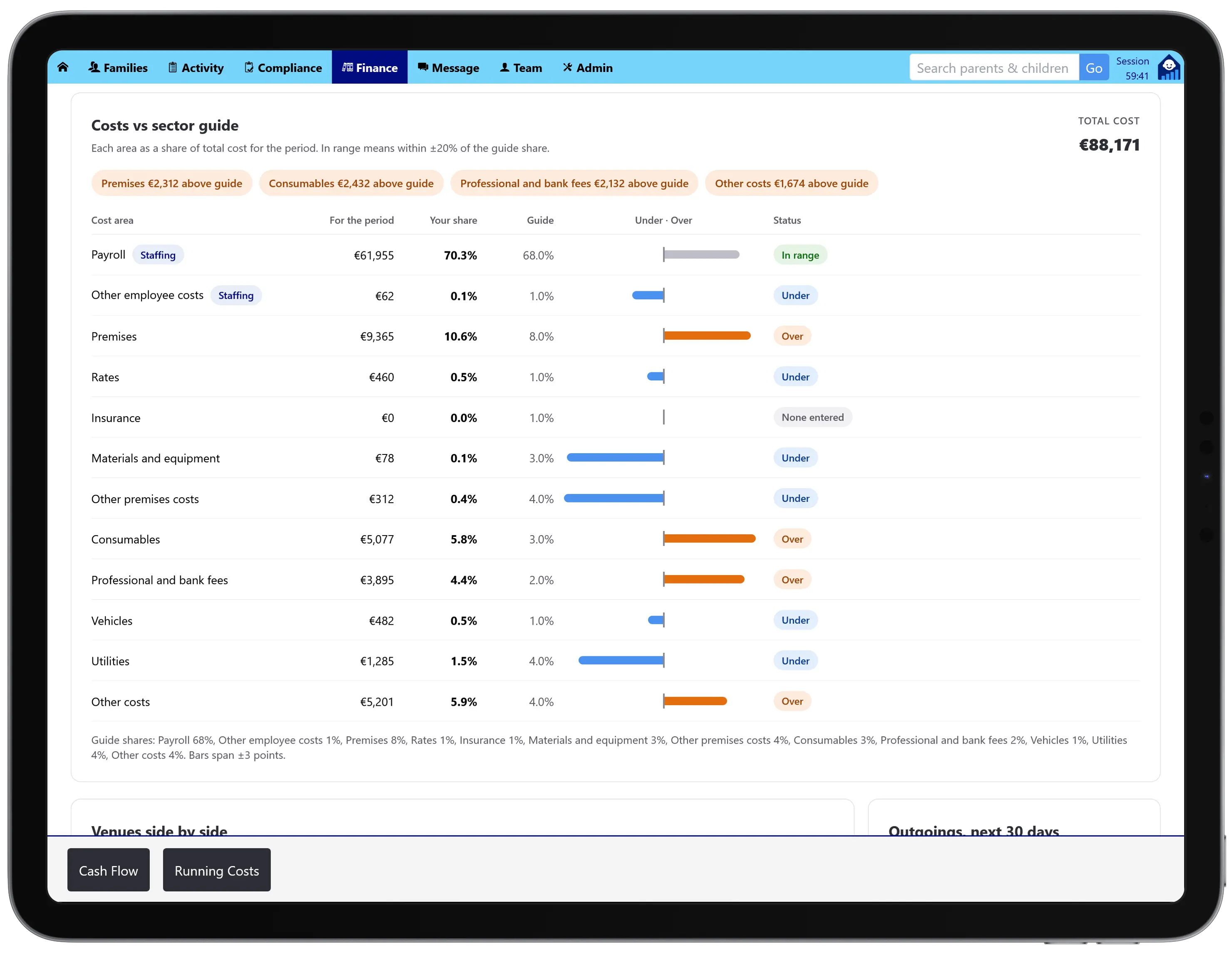
Your costs against a sector guide
Tot Tracker shows each area's share of your total costs, such as payroll, premises or utilities, beside a guide share for the sector, and marks each one as in range, under or over.
It is a quick way to spot the area that is out of line. The guide is a fixed typical profile, not live data from other services.
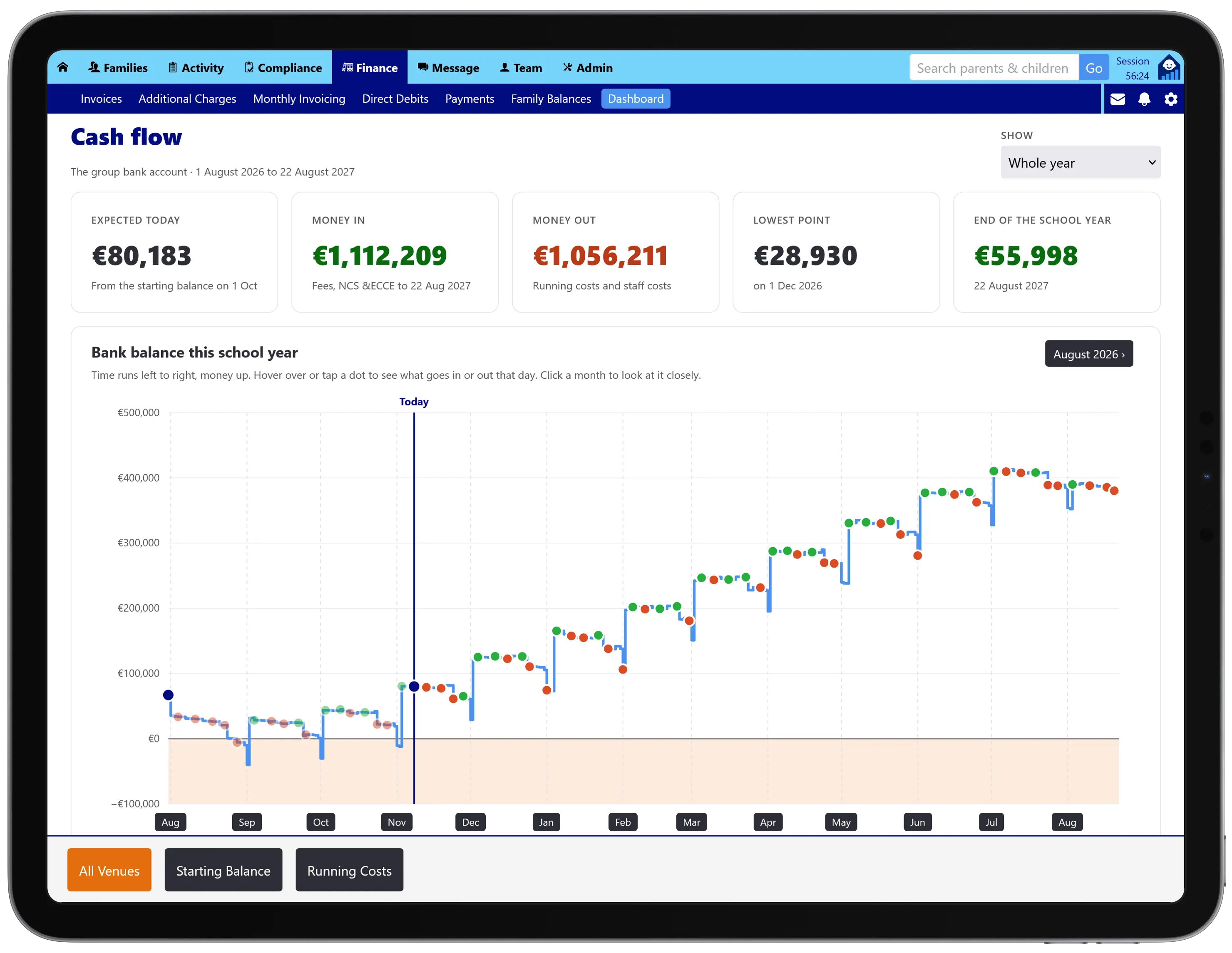
A cash flow forecast to the end of the school year
From your bank balance, Tot Tracker works forward through the year: parent fees, NCS and ECCE payments as they arrive, and every cost on the day it is paid.
You see the lowest point and where you expect to finish the school year, so a dip shows up before it happens.
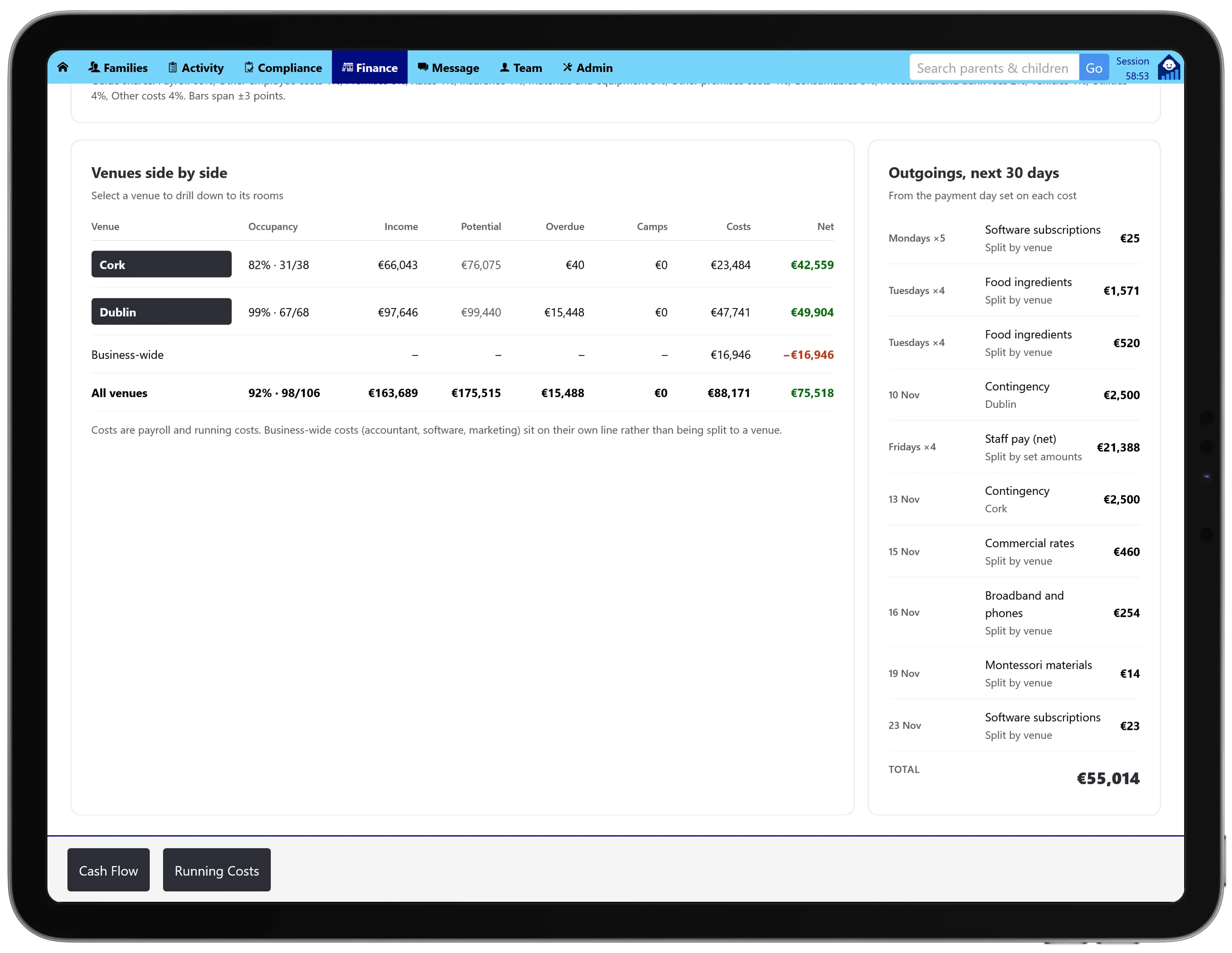
Venues side by side
If you run more than one venue, see them in one table: occupancy, income, potential, overdue fees, camp income, costs and net position, with a total for all venues.
The venue that looks busiest is not always the one making money. Side by side, it is clear which venue to fill and which is carrying the others.